

Is The Future of Healthcare Michelin or McDonald's? ChatGPT Health and the Path Ahead.
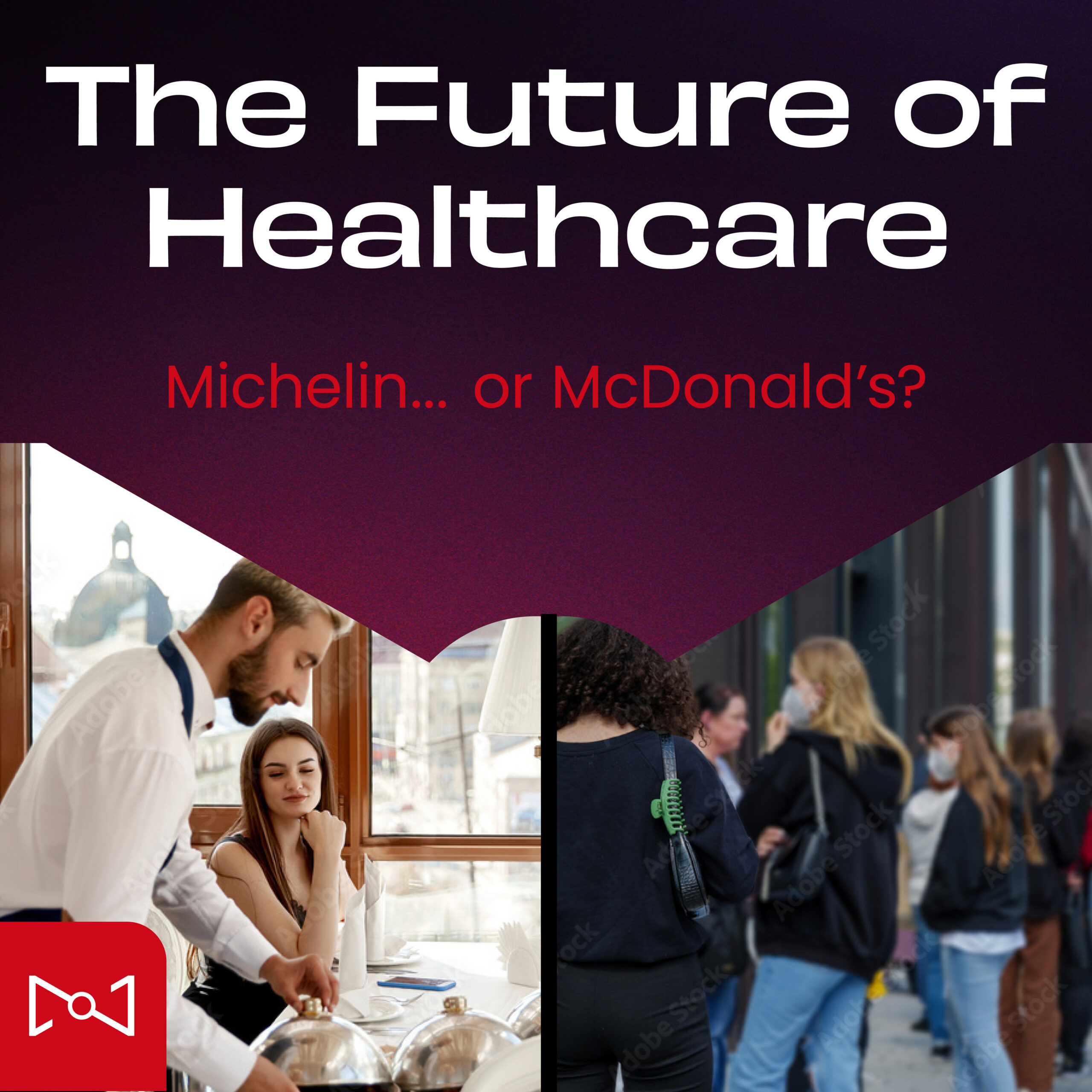
ChatGPT Health and the Future of Healthcare: Michelin Precision or McDonald's Scale?


With the arrival of ChatGPT Health and high-end preventative scanning, we’ve reached a fork in the road in ChatGPT Health, the future of healthcare. As we scale technological advancements in health, wellness, and medicine, we have to ask ourselves a simple question: is the future of healthcare Michelin or McDonald’s?
The McDonald's Model: Efficiency at Scale
On January 7th, 2026, OpenAI shifted the "floor" of medical advice with the launch of ChatGPT Health. With 230 million health chats happening weekly, we are seeing the birth of the "McDonald’s version" of medicine.
It is fast. It is efficient. It is affordable.
In this model, you connect your Apple Health data, your medical records, and your wearables into a seamless, reactive loop. You are greeted by an AI Nurse, diagnosed by an AI-assisted Physician, and sent on your way with a care plan generated in seconds. It is "medicine ordered your way," built on the logic of the assembly line to solve the massive imbalance between caregiver supply and patient demand.
And ChatGPT isn't the only one seeing an opportunity for new healthcare models.
The Michelin Model: The Luxury of Intention
On the other side of the coin, On the Nov. 17th episode of the All-In Podcast, Chamath shares with us his annual visit to Prenuvo. He undergoes a full body MRI scan that lasts over an hour and includes an overview looking for solid tumors, whole spine and joint conditions, metabolic and neurological disorders, to brain health, body composition and includes lab testing. This is all for the low price of $3999 (or $4499 if you live in NYC).
Chamath shares how he has been maintaining a calcium score of 0 in his 10 year journey on statins under the care of Dr. Carlsberg. While his genetics are predisposed for cardiac disease, he has been able to combat the onset of cardiac disease through healthy diet, exercise, and a statin intervention.
This is the Michelin 3-star choice. This is the model of health that has a reservation.
You will walk in and be greeted by a concierge that will know you by name, reason for visit, and will accompany you along the way. They will spend time sitting with you, physically examining you with their hands, their stethoscope, using that small little hammer to test your reflexes, a blood pressure cuff to take your blood pressure, and as all of your health information is being recorded, they will look you in the eyes.
They will take the time to review all of your additional health data that comes from preventative scans such as the one above from Prenuvo. They will then assign you with a personal assistant that will be programmed to collect, inspire, adjust, recommend, and deliver daily insights on how the choices you made today will impact your tomorrow and future self.
This version of care will be intimate, time consuming, costly, proactive, and delivered at the N of 1.
The Growing Healthcare Gap
One can begin to imagine how medicine and healthcare may begin to evolve in this bifurcated system.
For those individuals and patients who seek fast, efficient, and affordable care, they may go to the McDonald’s version. When you need immediacy, convenience, affordability, and average care, it will be the reactive version with an AI Kiosk, an AI Nurse to take your vitals and update your history and reason for visits, and finally you will be seen by an AI-assisted Physician to examine, provide a diagnosis, care plan, and send you on your way. In, out, and medicine ordered your way.
In this system, data is becoming a new barrier to entry, where those with disposable income can "engineer" their way out of their genetic destiny through hand-crafted, proactive care.
Meanwhile, the rest of the world is funneled into an automated, reactive system where "average" is the best one can hope for.
As the imbalance between supply (caregivers) and demand (patients) in healthcare increases, we need to address the increasing gap between those with disposable income that can afford proactive care, interventions, and alter their lives, versus those that cannot afford to get sick.
The direction of this change is up to us. We must decide if "good enough" care is acceptable for the many, or if we will fight to keep the Michelin-level of human intentionality accessible to more than just the 1%.
Get insights like this delivered monthly.
Subscribe to the CancerGeek newsletter for exclusive perspectives on healthcare innovation, digital health trends, and more delivered straight to your inbox.