

The speed of progress and the human pulse.
What a century of technological disruption can teach us about keeping the individual at the center of innovation.


It’s easy to get lost in the sheer speed of technology right now. Between deepfakes, large language models, and automation, the narrative around AI has created an intense sense of innovation gone wild. We treat this transition like an unprecedented disruption to human utility—as if we’ve suddenly stumbled into a storm that society has no blueprint for surviving.
But history has a funny way of rhyming with itself right when we think we’ve discovered something entirely new. If we want to understand how to survive the AI transition, we have to look closely at the lessons from history on technological disruption and how we made peace with a shifting landscape last time.
An article in the Wall Street Journal caught my attention because it traces a beautiful parallel between our current moment and the 1920s. It’s a historical mirror worth leaning into. A century ago, a massive wave of innovation—cars, mass-audience radio, and electrification—swept through the country, triggering the same anxieties about displacement, safety, and the erasure of human connection that we are feeling today.
If we want to build a better future, studying these lessons from history on technological disruption gives us a realistic framework for managing the friction of progress.
The friction of new connection
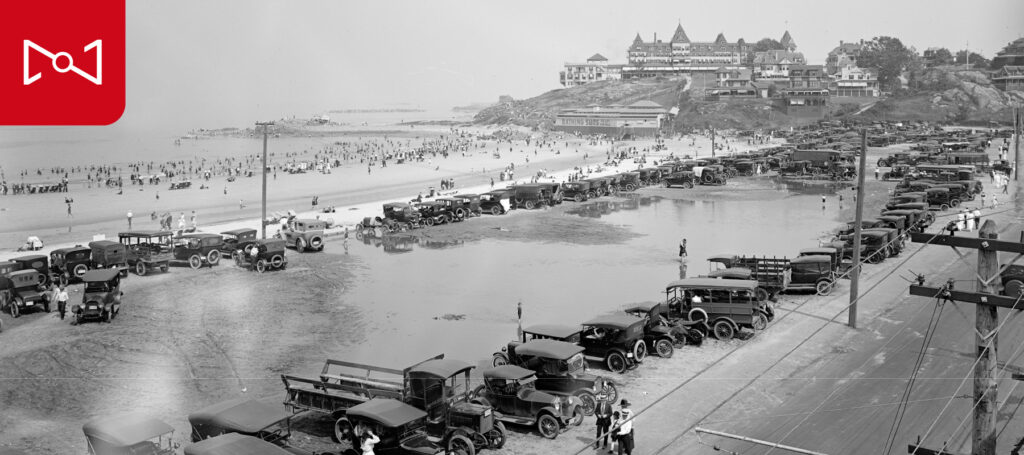
When the automobile first hit mainstream America, it didn't just change transportation; it dismantled social physics.
Sociologists in the 1920s documented how the fast car annihilated long-standing cultural norms. Courtship shifted from chaperoned living rooms to unsupervised backseats. Weekend "rambles" on the open road began replacing Sunday morning church attendance. Traditionalists panicked, warning that the very fabric of the home was endangered.
It’s the same anxiety we feel today when we worry that algorithms are isolating us or that virtual interactions are replacing physical presence.
But society didn't collapse. We adapted. The old guard grudgingly made peace with the new reality because the innovation brought an undeniable utility to their lives. The human desire for connection didn't disappear; it just found a new vehicle.
When the labor landscape shifts
The loudest voice in the AI conversation right now is fear of displacement. We worry about what happens when a machine can write the essay, scan the X-ray, or code the software faster than a human.
In the 1920s, the horse-and-buggy ecosystem was completely wiped out. Blacksmiths and carriage makers saw their livelihoods vanish. Yet, the mass production of the automobile didn't leave the workforce stranded. It created an entirely new spillover economy. Suddenly, the world needed gas stations, road construction crews, mechanics, and suburban infrastructure.
When technology automates a process, it doesn't just eliminate a task; it shifts the terrain. The electrification of factories in the 1920s didn't just replace steam; it reconfigured the factory floor and created entirely new categories of labor.
AI will do the same. It is a tool to automate the administrative grunt work, freeing up human time and bandwidth to focus on what matters most. The challenge isn't the presence of the tool, it's our willingness to retrain and adapt.
The mandate for better standards
The most critical lesson the 1920s offers us is accountability.
In the early part of that decade, the wild rush of innovation was a safety hazard. Cars lacked four-wheel brakes or rearview mirrors. Airplane pilots took to the skies with zero licensing and minimal training. The per-mile death rate for automobiles was twenty times higher than it is today.
We didn't survive that era by banning the car or grounding the planes. We survived because we demanded accountability. The Air Commerce Act of 1926 set rigorous requirements for flight. Cities designed traffic lights, and manufacturers engineered better brakes.
Right now, AI is in its "no rearview mirrors" phase. We are looking at deepfakes, unvetted algorithms, and data systems operating without human oversight. The solution isn't to retreat into a defensive crouch and reject progress. The solution is to demand the same clinical grit and structural guardrails that we built a century ago.
Why the human has the final say
When mass-audience radio took over in the 1920s, intellectuals dismissed it as a noisy, idiotic embarrassment meant only for the lonely. But the innovators pushed forward, aiming to connect a fragmented nation through a shared cultural pulse.
A century later, the skeptics are saying the same thing about TikTok, ChatGPT, and automated medicine. The doubters always have a valid critique of the friction, but history shows that the innovators ultimately win out.
We cannot stop the velocity of AI, nor should we want to. These tools possess an extraordinary capacity to navigate massive data ecosystems. But we must remember that technology is the co-pilot, not the pilot.
The 1920s proved that human agency is resilient. Ultimately, the most reassuring lessons from history on technological disruption remind us that while innovation will rewrite the rules of the transaction, it can never replace the human pulse at the center of the story.
Surviving the revolution isn't about fighting the machine; it's about ensuring the machine serves humanity at the Nof 1.
Get insights like this delivered monthly.
Subscribe to the CancerGeek newsletter for exclusive perspectives on healthcare innovation, digital health trends, and more delivered straight to your inbox.