

Saving the soul in the age of the machine.
What a papal encyclical can teach us about safeguarding the individual in the age of AI.


We spend a lot of time talking about systems, workflows, productivity, and scale.
Every few months, a new platform arrives promising to automate our burdens, streamline our decisions, and help us move faster than ever before. It’s easy to get caught up in the sheer velocity of it all; to look at the rapid rise of artificial intelligence and believe we are just passengers in an inevitable technological storm.
Recently, I found myself reflecting on all of this after reading an unexpected source of leadership thinking. It gave me pause in a way few technology narratives do.
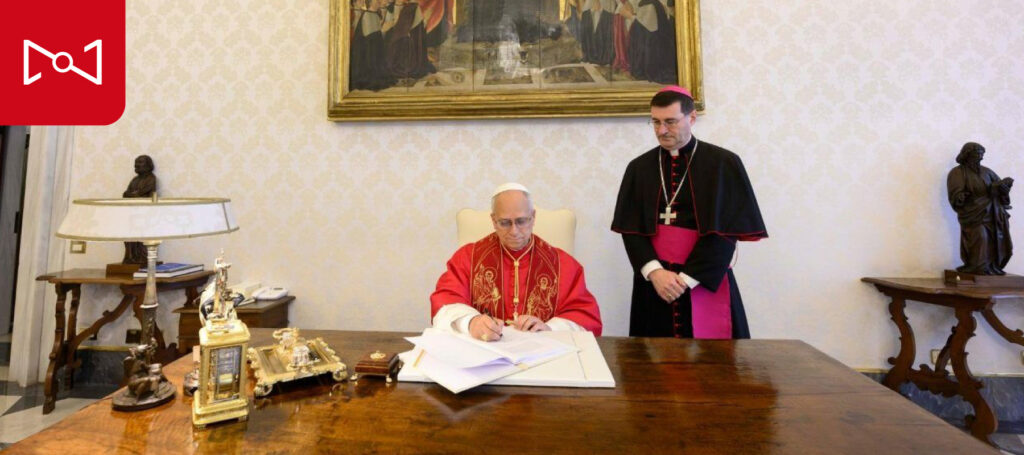
Pope Leo XIV released his first encyclical, titled ‘Magnifica humanitas: On Safeguarding the Human Person in the Time of Artificial Intelligence’. Regardless of your faith or tradition, the document offers something worth considering. It really isn't about technology. It's about humanity.
At its core, it asks a simple question: As our tools become more powerful, what happens to the person at the center of the experience?
The question resonates with me deeply because it sits at the heart of what I often describe as the N of 1. Whether we're talking about healthcare, leadership, or technology, progress only matters if it ultimately serves the individual.
Performance vs. personhood
The loudest justification for the mass integration of AI is productivity. The machine promises to take over mundane tasks, optimize our time, and deliver flawless execution.
But the encyclical highlights a sharp tension here: "new ways" of working are not always better. When we design systems centered solely on performance rather than the person, machines stop supporting human capability—and workers are forced to adapt to the speed and raw demands of the machine.
An efficient workflow is a failure if it leaves no room for human judgment. Technology can—and should—alleviate repetitive administrative burdens. But when a workflow forces a person to operate at the cadence of an algorithm, we aren't innovating. We are automating the human element out of the story.
Work must remain a source of meaning, not just a transactional output.
The fiction of perfect answers
In a world running on predictive text and large language models, we are building an environment filled with "perfect machines." You ask a prompt and get an immediate, polished synthesis of data.
The encyclical raises a warning about this exact dynamic: we risk creating an environment where the "desire to ask questions" is systematically extinguished because perfect machines make independent human thought seem redundant.
This hits at the core of how we design education, leadership, and clinical spaces. True growth doesn't happen when we are handed an automated answer. It happens in the friction of inquiry. It happens when we learn to seek and shine a light on the truth, rather than just consuming a processed output.
When we rely on systems that simulate empathy and understanding without ever actually experiencing them, we trade genuine relationships for data processing. The machine is an exceptional interface for navigating information, but it cannot replace the nuance of human judgment.
Resisting the architecture of visibility
Perhaps the most striking phrase in the entire document is the critique of the "architecture of visibility."
Digital platforms are intentionally designed to provide dopamine hits that will capture our time, profile our behavior, and exploit our vulnerabilities. They create a new form of power that amplifies only what is immediately visible, shaping public opinion and directing behavior through algorithmic feedback loops. It turns personal lives and personal data into something exploitable.
This is a massive wake-up call for how we protect individual autonomy. When we allow algorithms to predict, direct, and categorize us, we risk discriminating against the weakest and most vulnerable among us. We reduce unique individuals to mere data points on a ledger.
Why the individual remains the N of 1
The ultimate choice ahead of us isn't between blind enthusiasm and defensive fear. It’s a choice between two distinct paths of development: a progress that actively serves individuals, or a progress that subjects them to a mentality of power.
Humanity - our capacity for deep relationship, for empathy, and for genuine connection - is something an algorithm can imitate, but never possess.
We cannot, and should not, stop the speed of technological innovation. But we must have the leadership and the grit to build structural guardrails around it.
Technology must always be the tool, never the pilot. Surviving the digital revolution requires us to ensure that as our systems become more capable, our commitment to caring for the individual at the N of 1 remains uncompromised.
Get insights like this delivered monthly.
Subscribe to the CancerGeek newsletter for exclusive perspectives on healthcare innovation, digital health trends, and more delivered straight to your inbox.