

AI in Healthcare Leadership: Why efficiency is only half the equation.


Every pitch for AI in healthcare seems to promise the same things: faster processes, lower costs, and greater efficiency. But as AI capabilities advance, healthcare leaders face a question that goes beyond technology: Are we thinking carefully enough about what people still need to do, learn, and lead?
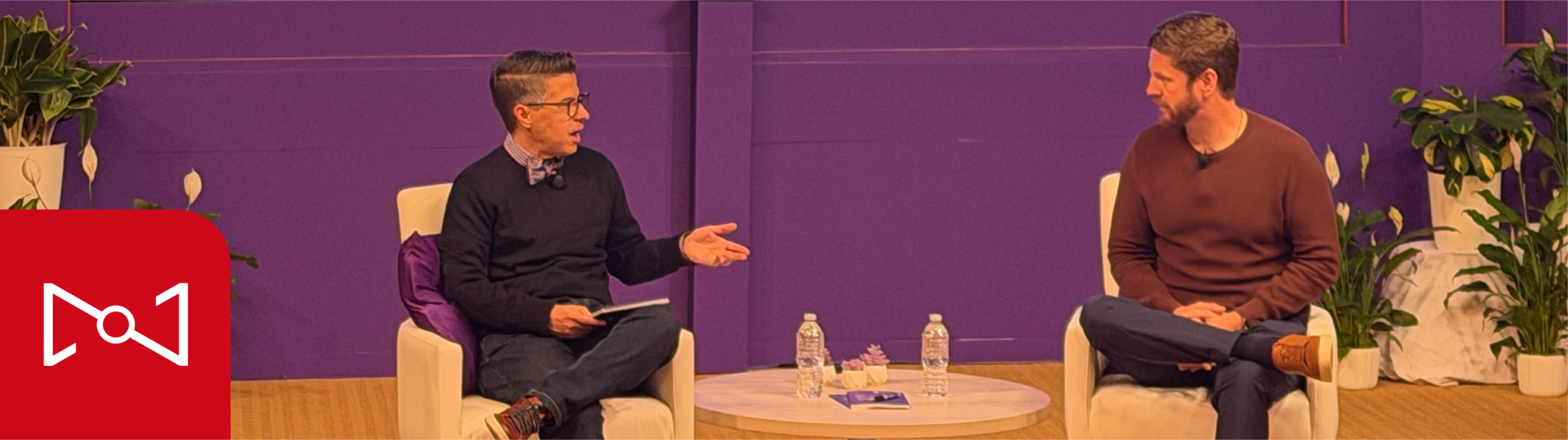
In September, I sat down with Mike Kaput, Chief Content Officer at SmarterX, at the GE Healthcare and The Health Management Academy’s Fellows Leadership Summit in New York to discuss this very question.
The summit brought together approximately 120 rising healthcare executives representing 64 health systems. Its theme, Superhuman Expectations, Human Limits, captured a growing tension. The assumption is that if you hand people a tool that automates work, their burden naturally goes down. But the reality is rarely that clear cut.
Here are my three key takeaways from our conversation that stood out to me.
AI doesn’t eliminate human limits. It moves them.
While AI can create meaningful efficiencies, technology can advance faster than people and institutions can adapt.
As it was shared during the discussion: "AI does not remove the human limit. It moves it, from how much your people can do to how much change they can absorb."
For healthcare leaders, successful AI adoption means looking beyond what a tool can accomplish and understanding the human cost of absorbing all that needs to change. Teams need time to learn new workflows, understand limitations, and determine when human judgment must take precedence, particularly as research from Elsevier’s Clinician of the Future 2025 report highlights gaps in institutional support and AI training. Without that support, AI can become another demand placed on already stretched professionals.
The goal isn't simply to automate more work. It's to make sure people have the capacity and support to adapt to what comes next.
Don’t automate away the training ground

As I asked during the fireside chat: "If we automate the tasks where people used to learn, we may also automate part of the training ground. What happens to the rung people used to climb?"
In healthcare, clinical expertise and leadership judgment are developed through experience. If AI takes over foundational tasks, organizations must rethink how else people can acquire those skills through mentorship, apprenticeship, and other intentional learning opportunities.
AI adoption is also becoming a talent challenge. Healthcare organizations are competing with technology companies for skilled professionals, while frontline employees are often experimenting with AI ahead of their institutions. Leaders who involve these employees, provide time to learn, and support responsible experimentation are better positioned to identify where AI can make a meaningful difference in their work and retain engaged talent.
Turn AI capacity into meaningful process.
AI creates capacity, but what an organization does with that capacity is a leadership choice.
Instead of pursuing AI adoption for its own sake, healthcare leaders should start with a specific problem and solve it with the help of the people closest to the work.
Here are three steps to help turn that intention into action:
- Choose one workflow to improve. Identify a concrete problem, understand the current process, and define what success looks like.
- Partner with frontline employees. Involve the people who understand the workflow to identify opportunities, anticipate challenges, and determine what skills and responsibilities must remain with people.
- Run a focused 90-day experiment. Establish clear guardrails, appropriate oversight, and measures of success. Evaluate not only time saved, but also accuracy, staff experience, quality, and potential risks.
At the end of the experiment, use the results to decide whether to expand, refine, or stop the initiative. The goal is to learn what works, not to assume every AI application will deliver its intended benefits.
Progress in healthcare depends on more than speed or efficiency. The goal should be to protect the expertise, judgment, and human relationships that make good healthcare possible.
The opportunity is to use technology thoughtfully while continuing to invest in the people who deliver care and shape its future.
Get insights like this delivered monthly.
Subscribe to the CancerGeek newsletter for exclusive perspectives on healthcare innovation, digital health trends, and more delivered straight to your inbox.