

The leadership crisis: Why stress is an executive blind spot.
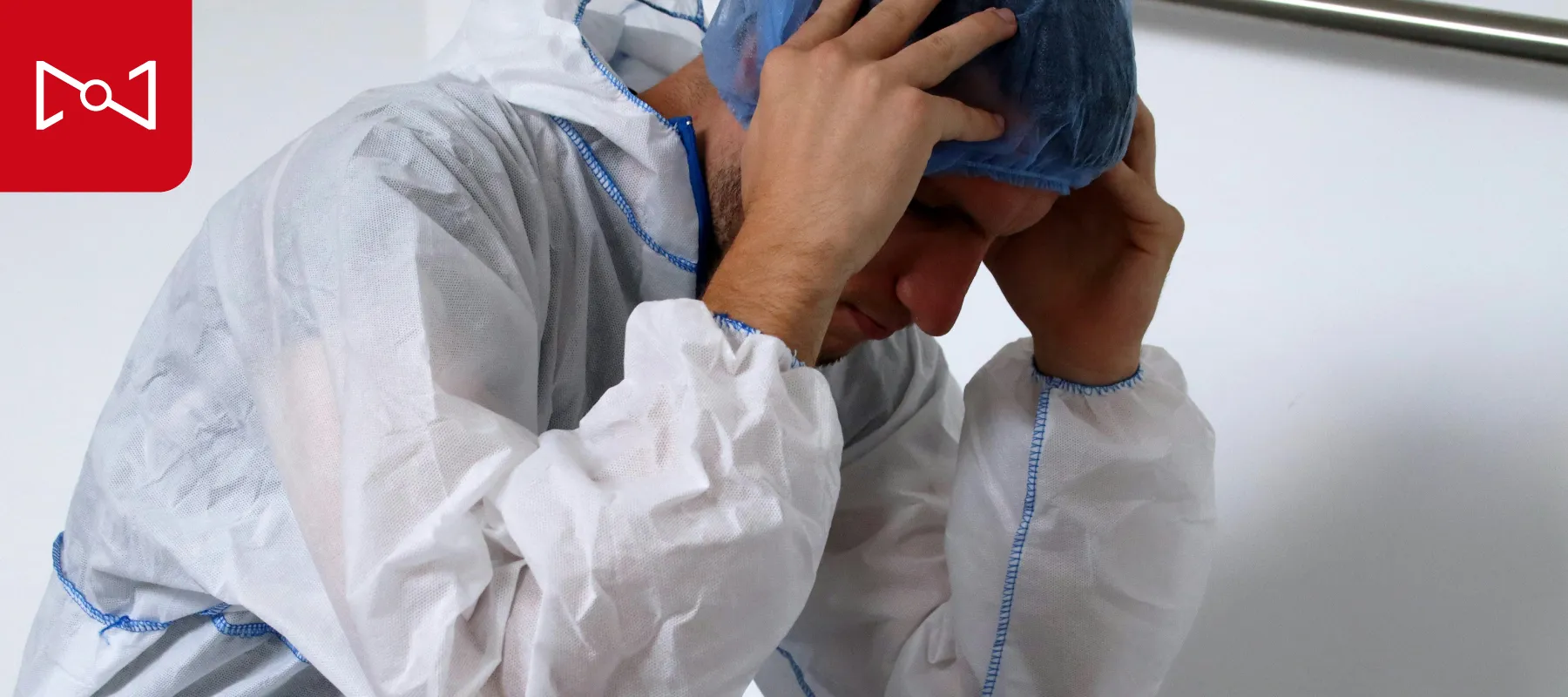


Why a leader’s biology may be the most overlooked driver of clinical safety and patient outcomes.
In healthcare, we are trained to prioritize the "Stat" over the "Steady."
We operate in an industrial system that prides itself on resilience, but leadership isn’t just about overseeing the system. It’s about shaping the environment where care happens.
Recently, I’ve been reflecting on the "grit" we demand from our teams. We’ve treated workplace stress as a personal hurdle for so long that we’ve failed to see it for what it truly is: a systemic disease. When we weaponize resilience against our clinicians, we aren’t just burning out people; we are compromising the N of 1.
The invisible cost of the squeeze.
In any complex environment, the human element is both our greatest asset and our most fragile. When the system squeezes the human, we see a predictable cycle of erosion.
According to OSHA, work-related stress contributes to 120,000 deaths annually. But the cost isn't just measured in mortality. When 83% of workers suffer from chronic pressure, their ability to deliver empathetic care is the first thing to vanish. More alarmingly, 54% of workers report that this stress bleeds into their home lives, fracturing the support systems they need to recover. Data from the ADAA shows that under this pressure, clinicians turn to survivalist coping through caffeine, medication, and isolation.
As leaders, we have to ask: Are we managing a healthcare team, or are we managing a high-functioning crisis?

Image source
The leadership gap: Environment vs. biology.
As a leader, it’s easy to view your own stress as a private burden. But leadership is the thermostat of the workplace. Research from PubMed and Kapable highlights a jarring reality: stress is a contagion.
When a leader operates from a place of chronic exhaustion, the biological environment of the team shifts. We stop being filters for friction and start being the source of it, creating critical failures in the care delivery chain:
- Stress induces cognitive narrowing. We lose the peripheral vision required to see the nuances of a complex case, reverting instead to rigid, industrial protocols that ignore the individual.
- Burnout leads to rigid thinking. In healthcare, a rigid decision is a missed opportunity for recovery.
- High-stress environments breed unpredictability. When a team cannot predict their leader’s reaction, they stop taking the risks necessary for empathetic care and retreat into the safety of the metrics.
The ROI of a healthy workplace.
In marketing, we measure ROI in numbers. In leadership, we must measure it in the cognitive space we reclaim for our teams. Reducing workplace stress has its own clinical return:
- Greater clinical empathy
- Sharper decision-making
- Increased occupational safety
- Stronger organizational longevity
Research confirms that Constructive Leadership- characterized by communication and recognition - is the bedrock of improved well-being and, ultimately, better patient results.
As healthcare systems grow more complex, and AI takes on a larger role, it’s tempting to rely solely on established processes and AI. But care at the N of 1 depends on the health of the healthcare worker. Empathy is not a resource we can automate; it is an innately human quality that requires a healthy environment to survive.
The big takeaway for leaders.
Leadership isn’t only about the big strategic shifts. Sometimes it’s about taking a moment to:
- Dismantle the ambiguity of role stress.
- Model healthy boundaries that prove you value the human over the metric.
- Dismantle the structural hurdles that prevent a diverse workforce from thriving.
The ROI of a mentally healthy workplace is building a culture where people have the mental bandwidth to see, value, and heal the person in front of them.
The future of healthcare depends on the health of the healthcare worker.
Get insights like this delivered monthly.
Subscribe to the CancerGeek newsletter for exclusive perspectives on healthcare innovation, digital health trends, and more delivered straight to your inbox.